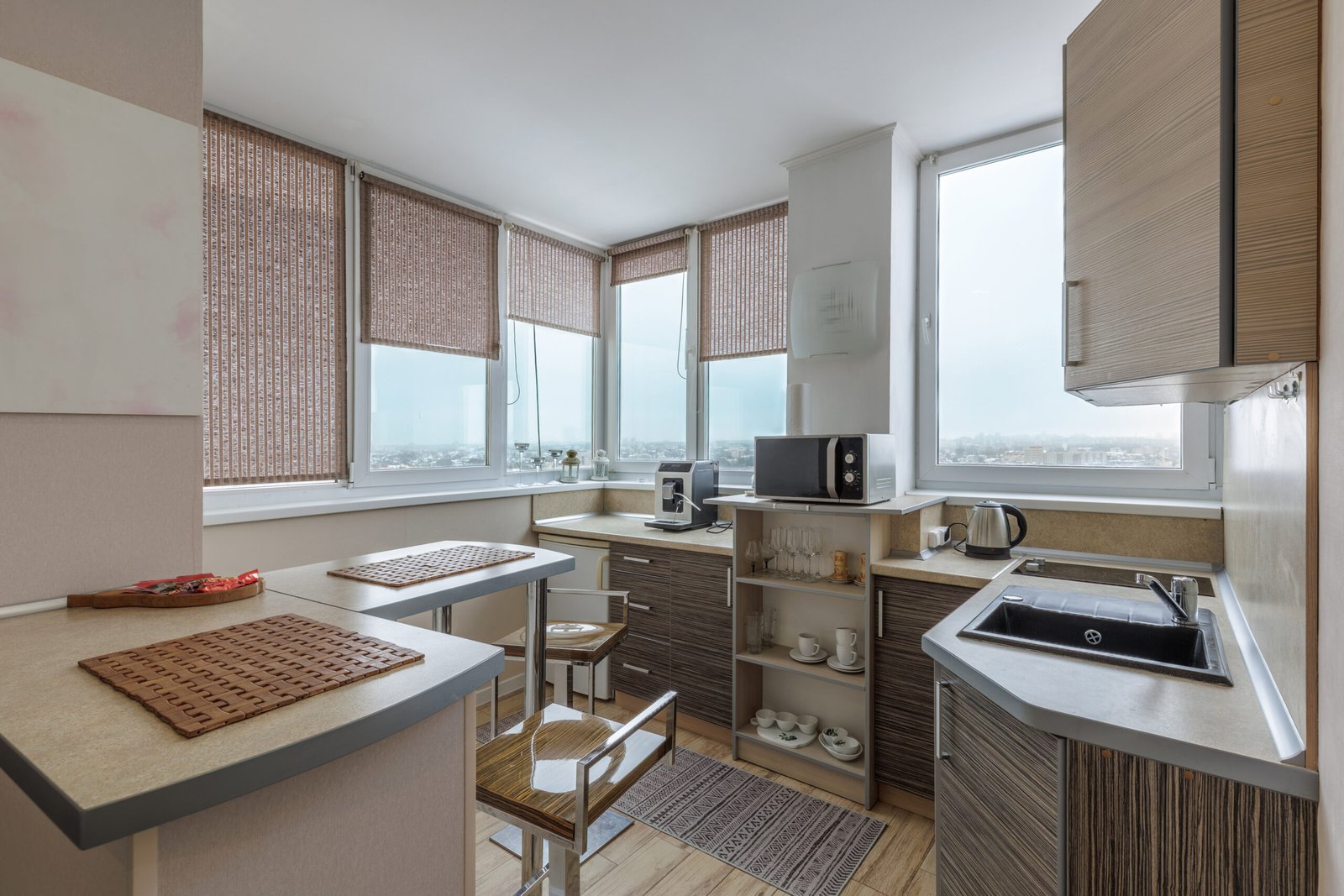
Let’s talk about rental kitchens.
Not the glossy, bespoke showroom kitchens with pull-out pantries, hidden spice drawers, soft-close everything, and a dedicated island.
I mean the real ones. The converted Victorian flats. The 1990s refurbishments. The slightly wonky cupboard doors. The single drawer that always sticks halfway. The awkward 15cm gap next to the freestanding washing machine. The landlord-approved layout that makes zero ergonomic sense, which you are absolutely not allowed to change.
Rental kitchens come with two problems that aggressively oppose each other:
- You need highly efficient storage (because you actually have to cook here).
- You cannot permanently install anything (because of your deposit).
So, things drift. Spices take over the worktop. Pans stack into precarious, unstable towers. Cleaning products compete with food under the sink. And every new tin of beans you bring home feels like it has nowhere to go.
Here is the mindset shift: Good kitchen storage ideas for renters aren’t about “fixing” the architecture. They are about building a removable infrastructure that sits on top of it. You don’t renovate. You layer.
For a broader approach to organising your entire space without risking your deposit, see these storage ideas for rented homes.
Here is how to create a highly functional, organised kitchen without drilling a single hole.
1. The Worktop Squeeze (Control the Surface)
In small kitchens, the worktop is your most valuable footprint. But it’s also the first place clutter accumulates.
The Dimensions of Clutter: A standard UK kitchen worktop is 600mm deep. A microwave takes up 400mm. A toaster takes up 200mm. A kettle, a chopping board, and a fruit bowl eat up the rest. Before you know it, you are trying to chop onions on a space the size of an iPad.
The Fix: Vertical Countertop Layers. You cannot push the walls back, so you must go up.
- Use small, freestanding countertop shelves (often made of bamboo or steel).
- Bottom layer: The heavy appliances you use daily (kettle, toaster) slide underneath.
- Top layer: Lighter, high-frequency items (mugs, tea jars, salt and pepper). You haven’t added physical square footage, but you have multiplied your usable surface area.
2. The “Inside Door” Advantage (Know Your Hinges)
You can’t drill into the splashback tiles, but the inside of a cabinet door is often fair game—especially if you use adhesive solutions. It is one of the most underused storage areas in a kitchen.
The Weight Limit Warning: Standard UK kitchen cabinets use concealed “cup” hinges (like Blum hinges). They are engineered to hold the MDF door, plus maybe 1.5kg to 2kg of extra weight max. If you overload them, the door will sag, scrape the frame, and potentially cost you your deposit.
The Strategy: Keep it strictly lightweight. Use adhesive hooks or slim plastic caddies for:
- Cleaning cloths and sponges.
- A roll of bin liners.
- Flat packets of recipe mixes.
- Plastic measuring spoons.
Adhesive Tip: Kitchens are covered in microscopic layers of cooking grease. If you stick a Command hook straight onto a cupboard door, it will fall off. You must wipe the area with surgical spirit (rubbing alcohol) first, let it dry, and wait 24 hours before hanging anything.
3. Tension Rods (The Physics of Friction)
Tension rods require no screws. They work through an internal spring pressing outward against two rigid surfaces. They are cheap, completely removable, and surprisingly strong.
Unexpected Kitchen Uses:
- The Under-Sink Rail: Fit a tension rod across the top of your under-sink cupboard. Hang your cleaning spray bottles by their triggers. This lifts them off the base, leaving the bottom free for a bin or sponges.
- The Pan Divider: Place two or three small tension rods vertically between two cabinet shelves. You have just created bespoke slots to store baking trays and chopping boards upright, stopping the dreaded “pancake stack.”
4. The 15cm Gap (The Slide-Out Pantry)
Rental kitchens almost always feature awkward gaps. Usually, it is a 10cm to 15cm void between the fridge and the wall, or next to the washing machine.
The Fix: The Slim Rolling Cart. You do not need to ask the landlord to build a bespoke filler panel. Buy a slim, tiered storage trolley on castors designed specifically for these narrow gaps.
- What it holds: Tins, spices, bottles of oil, and boxes of foil.
- The Mechanics: When you need access, you roll it out by the handle. When you are done, you slide it back into the shadow. It requires zero installation and moves with you to your next flat.
5. Shelf Risers (Defeating the “32mm System”)
Most flat-pack kitchen cupboards are built using the “32mm System”—rows of holes drilled down the sides to allow for adjustable shelves. However, landlords frequently lose the spare metal pegs, leaving you stuck with one shelf positioned awkwardly in the middle. If you store a stack of plates, you are left with 30cm of empty air above them.
The Fix: Wire Shelf Risers. These are essentially little metal tables with folding legs. You place them directly onto your existing shelf.
- They create a second tier instantly, effectively doubling your usable volume.
- Perfect for: Storing mugs above side plates, or creating a tiered system for tins so you can actually see the baked beans at the back.
These kitchen cupboard storage ideas go deeper into fixing awkward cabinet layouts and making every shelf usable.
6. Over-the-Sink Space (The Drip Zone)
The airspace directly above the sink is almost always ignored.
The Upgrade: If your landlord hasn’t provided a draining board (common in tiny London flats with Belfast sinks), use an Over-Sink Drying Rack.
- These are structural steel frames that bridge across the entire basin.
- They hold wet plates, mugs, chopping boards, and cutlery directly over the sink, allowing the water to drip straight down the plughole.
- It entirely removes the need for a countertop dish rack, reclaiming a massive chunk of your worktop for food prep.
Once over sink has been sorted, the area under the sink is often the worst offender—these under sink storage ideas without drilling fix it properly.
7. Magnetic Storage (Neodymium Power)
If your rental kitchen has a freestanding fridge with exposed metal sides, you have a blank canvas for vertical storage.
The Mechanics: Look for storage racks that use Neodymium magnets (rare-earth magnets). They are exponentially stronger than standard fridge magnets and can hold serious weight without sliding down the steel casing.
- What to hang: Heavy-duty magnetic shelves can hold cooking oils, a roll of kitchen towel, and heavy glass spice jars.
- Safety Note: Leave a small gap between the storage and the wall. Fridges need to dissipate heat from their condenser coils; blocking airflow makes the appliance work harder and uses more electricity.
8. The Geometry of Decanting
In a rental kitchen where space is brutally limited, food packaging is your enemy. Cardboard cereal boxes are often 30% empty air. Half-used bags of pasta slump over, taking up twice the footprint they actually need.
The Fix: Square, Airtight Containers. Decanting isn’t just an aesthetic trend; it is a mathematical necessity.
- Why Square? Round jars waste the triangular space between them. Square acrylic containers sit flush against each other, utilising 100% of the shelf’s spatial geometry.
- The UK Climate: Decanting into airtight containers stops the notorious British damp from turning your sugar into a brick, and keeps pantry moths out of your flour.
9. The “One In, One Out” Rule
Rental kitchens have fixed, immovable physical limits. You cannot build an extension.
That means every new item must replace something else.
- If you buy a fancy new air fryer, an old appliance (like that toasted sandwich maker you haven’t used since 2022) must leave the kitchen.
- If you buy a new set of mugs, the chipped ones go to the charity shop. This strict boundary prevents slow, creeping accumulation from suffocating your space.
10. The 80% Capacity Buffer
Just because you can fill a cupboard doesn’t mean you should.
If every shelf is packed to 100% capacity, you create extreme friction. To put away a single coffee mug, you have to move three other items. When putting things away is difficult, human nature dictates that we simply leave the item on the worktop instead.
Leave 20% of your cupboard space empty. That buffer absorbs daily life—the bulk grocery shop, the leftover Tupperware, the new box of tea—without breaking your system or forcing clutter out into the open.
Final Thoughts
Kitchen storage ideas for renters are not about clever hacks that risk your deposit. They are about building a system that respects physical constraints.
No drilling. No permanent changes. No damage. You layer storage vertically. You exploit the physics of tension rods and magnets. You prioritise mobility through rolling carts.
Once everything has a structured, easily accessible place, the kitchen stops feeling like a cramped compromise, and starts functioning like a proper workspace.
3 thoughts on “Kitchen Storage Ideas for Renters (No Drilling, No Damage, No Stress)”
Comments are closed.