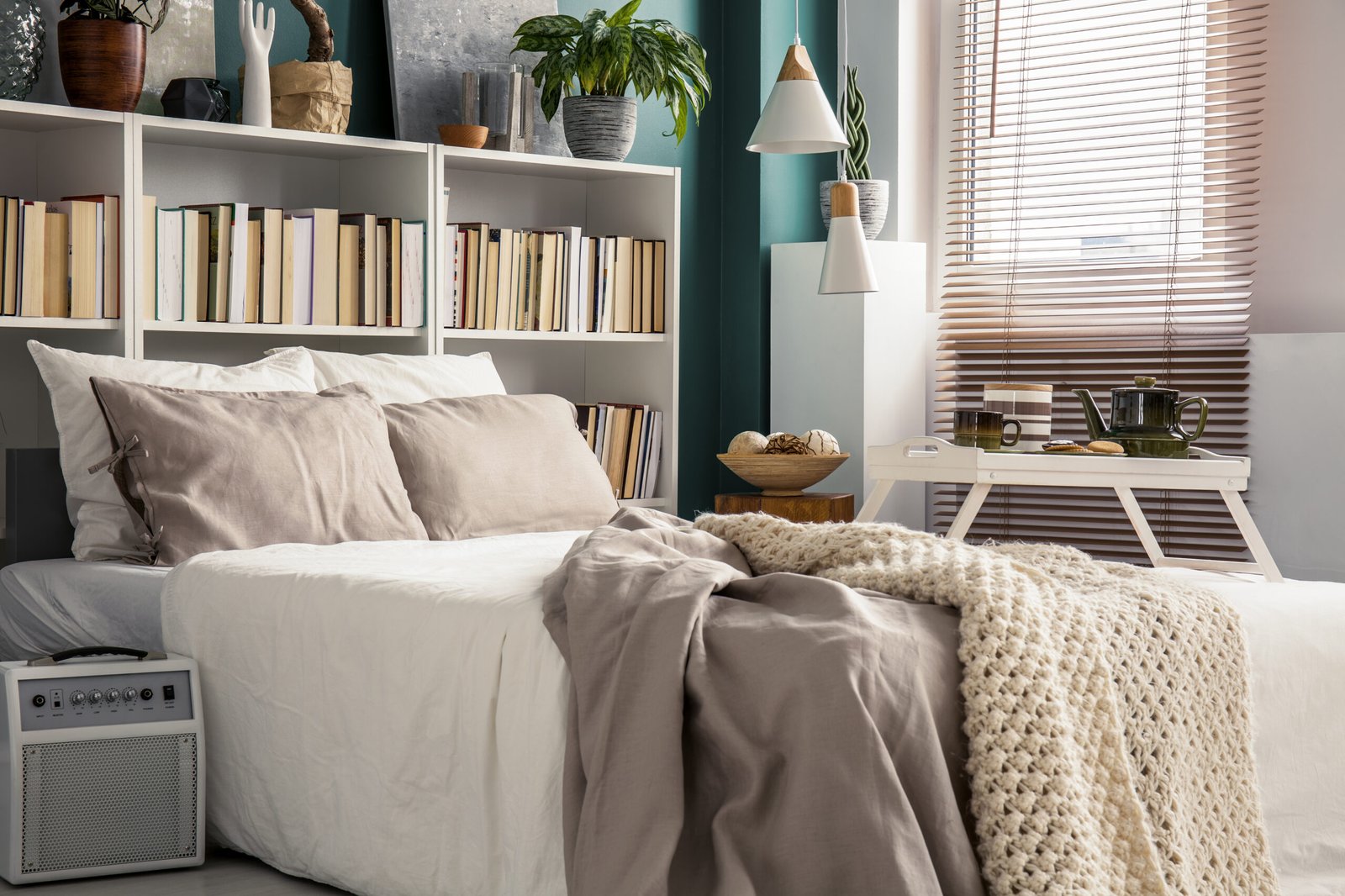
Let’s talk about small bedrooms.
Not the minimalist showrooms you see in magazines, with floor-to-ceiling fitted wardrobes, a floating bed, and nothing on the floor except a strategically folded cashmere throw.
I mean real small bedrooms. The “box room” that became the main bedroom because the other one had even less storage. The rental flat with one shallow wardrobe and literally nowhere to put a suitcase. The room where the bed takes up so much floor space that opening a drawer feels like a logistical exercise involving shin splints.
Small bedrooms don’t feel stressful just because they are small. They feel stressful because they are asked to do too many jobs at once. They are expected to store clothes, shoes, bedding, laundry, accessories, work bags, chargers, books, and sometimes even a drying rack or a baby monitor.
When storage fails in a small room, the mess has nowhere to hide. It spills onto the floor. It covers the chair. It creeps onto the bed. And here is the science bit: Clutter raises cortisol. If the last thing you see before you close your eyes is a pile of laundry, your sleep quality quietly drops.
Good small bedroom storage ideas aren’t about cramming more furniture into the room. It’s about using the space that already exists, reducing “visual noise,” and creating rules that stop the clutter from spreading.
Here is how to make a small bedroom work harder without making it feel boxed in.
1. The Bed: Your Secret Storage Unit
In a small bedroom, the bed dominates the footprint. In a standard UK box room (often 2.5m x 2.5m), a double bed takes up nearly 40% of the floor space. If that space is just air, you are wasting the biggest asset you have.
The Upgrade:
- The Ottoman Bed: If you are buying new, get an ottoman (gas-lift) bed. Unlike drawers, which require space on the side to pull out (space you might not have), an ottoman lifts up. You can use the entire cavity underneath for bulky items like suitcases, spare duvets, and winter coats.
- The “Risers” Hack: If you rent and can’t buy a new bed, buy a set of bed risers. Lifting your bed by just 10cm can be the difference between sliding a storage box underneath and having to leave it on the floor.
The Rule: Nothing goes under the bed loose. Loose items collect dust bunnies and are impossible to retrieve. Use wheeled plastic bins or fabric bags with handles.
Using proper containers for under bed storage is one of the easiest ways to reclaim space in a small bedroom without adding visual clutter.
2. The “Chair of Doom” (Manage the In-Between)
Every small bedroom has one. The chair. Or the bench. Or the corner of the radiator. It starts as a place to put clothes “just for tonight.” Then it becomes a semi-permanent wardrobe of worn-once items that don’t feel clean enough to put away, but aren’t dirty enough for the laundry.
This isn’t a discipline issue. It’s a System Failure. You cannot stop the “in-between” clothes, so you must design for them.
The Fix:
- The “Valet” Hook: Install a sturdy double hook on the back of the door or the side of the wardrobe. This is exclusively for “worn but clean” clothes.
- The Ladder Rack: A slim ladder leaning against the wall takes up zero floor depth (unlike a chair) but holds three pairs of jeans and a hoodie.
- The Dedicated Basket: Have one nice wicker basket. If you are too tired to hang it up, drop it in the basket. It keeps the floor clear.
3. Verticality: Sell the Air Rights
In small bedrooms, floor space is sacred. Anything that lives on the floor makes the room feel tighter, harder to clean, and more cluttered. Walls, however, are usually empty.
The Strategy: Move storage upward.
- Above the Door: There is usually 30–40cm of space above the bedroom door frame. Install a simple shelf here for books, hat boxes, or bags you rarely use. You don’t see it when you are in the bed, so it doesn’t feel cluttered.
- Tall & Slim: Choose a wardrobe that goes as close to the ceiling as possible. A wardrobe that stops 2 feet below the ceiling is wasting 20% of its potential. If you rent, use the top of the wardrobe for matching storage bins.
- Wall-Mounted Nightstands: Instead of a bulky bedside table with legs, mount a small floating shelf or drawer. seeing the floor extend to the wall tricks the eye into thinking the room is bigger.
When floor space is limited, these vertical storage ideas for small rooms show how to use wall height to dramatically increase storage.
4. Depth is the Enemy (The 35cm Rule)
A common mistake is choosing storage that sticks out too far. Standard chests of drawers are often 45–50cm deep. In a small room, this eats into your walkway.
The Slim-Line Strategy: Look for “hallway” furniture instead of “bedroom” furniture.
- Shoe Cabinets for Clothes: IKEA Trones or Hemnes shoe cabinets are only 18–22cm deep. They are perfect for storing t-shirts, underwear, socks, and accessories in a tiny bedroom where a normal dresser wouldn’t fit.
- Console Tables: Use a slim console table as a dressing table or desk.
If you have to turn sideways to walk past a piece of furniture, it is too deep. Remove it.
If you’re working with the UK’s notoriously tiny third bedroom, these box room storage ideas show how to maximise every centimetre.
5. The “Active” Wardrobe
In small bedrooms, wardrobes often collapse into chaos because they are expected to handle:
- Everyday clothes
- Formalwear
- Shoes
- Bags
- Bedding
- That guitar you never play
That is too much for a single rail. The Fix: Seasonal Rotation. A functional small-bedroom wardrobe has a clear job: Current Daily Clothing Only.
- Store off-season clothes in vacuum bags under the bed.
- Store formal wear in a different room or high up.
- Limit the hanging space to what you actually wear in the next 4 weeks.
When the wardrobe isn’t fighting for space, your morning routine becomes faster.
A clear seasonal rotation is the foundation of good wardrobe organisation, especially when hanging space is limited.
6. Visual Quiet (The Matching Rule)
You can have a lot of stuff in a small bedroom—as long as it looks like one big thing instead of twenty small things.
Our brains process every distinct object as a separate piece of data.
- A red box, a blue bag, a cardboard box, and a wire basket = 4 pieces of visual data. (High cognitive load).
- Four identical white boxes = 1 piece of visual data. (Low cognitive load).
The Hack: Buy matching storage containers. It doesn’t have to be expensive. Just ensure they are the same colour and style. It calms the space instantly and makes the room feel “designed” rather than “cluttered.”
7. Lighting as a Storage Tool
Poor lighting exaggerates clutter. Shadows in the corners make piles of stuff look darker and messier.
The Fix:
- Get rid of the floor lamp: It takes up floor space. Use wall sconces (you can get battery ones if you can’t wire them in) or clip-on lights.
- Wardrobe Lights: Stick battery-operated motion sensor lights inside your wardrobe. Being able to see the back of the shelf stops you from buying duplicates because you “couldn’t find the black t-shirt.”
8. The Nightstand Trap
Bedside tables in small bedrooms often become miniature junk drawers. Chargers, books, skincare, glasses, receipts, water bottles—all competing for a surface the size of a pizza box.
The Rules:
- Closed Storage: Try to have a nightstand with a drawer. Hide the mess.
- The “Three Item” Limit: Only three things allowed on the surface (e.g., Lamp, Water, Phone).
- Cable Management: Clip your charging cable to the side or back of the nightstand so it doesn’t snake across the floor (tripping hazard).
9. Leave Empty Space on Purpose (The 80% Rule)
This feels counterintuitive. You want to maximise storage, right? Wrong. A small bedroom filled to 100% capacity will always relapse into chaos. There is no buffer. When you bring in a new bag, or a pile of laundry, or a delivery, there is nowhere for it to go except the floor.
Aim for 80% Full. Leave one shelf empty. Leave one hook free. That “breathing room” is what stops the clutter from spreading to the bed.
Final Thoughts
A small bedroom doesn’t need to feel cramped. It needs boundaries.
When storage is lifted off the floor, when every category has a clear home, and when the “in-between” clothes are contained instead of scattered, the room stops fighting you.
You sleep better in a room that isn’t negotiating for space with your stuff. Start with the bed (can you fit storage under it?). Then deal with the “Chair of Doom.” Everything else gets easier after that.
If you’re renting and can’t drill into walls, these storage ideas for rented homes will help you build systems that leave no trace.
6 thoughts on “Small Bedroom Storage Ideas That Create Space Without Making the Room Feel Smaller”