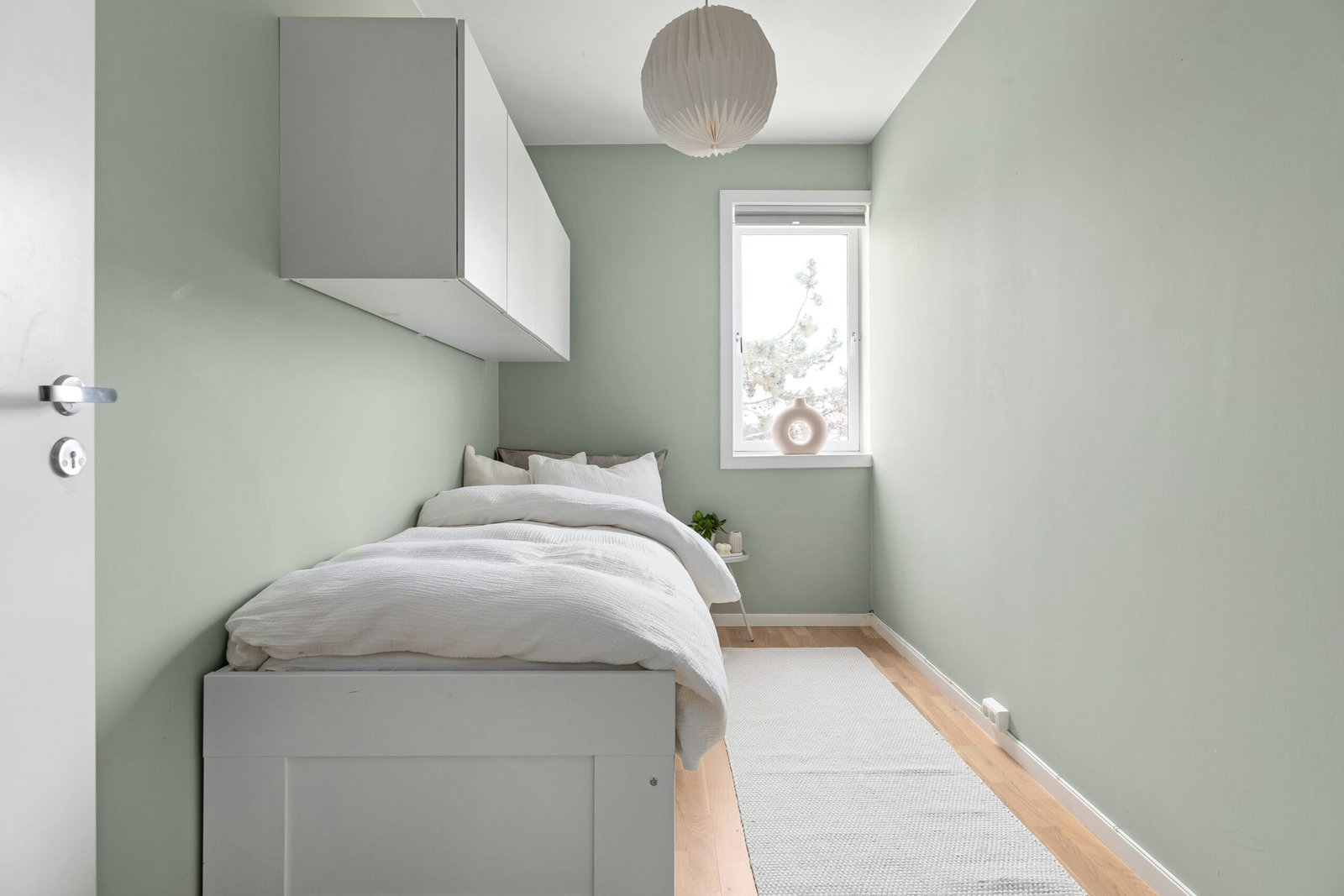
Let’s be honest for a second: small bedrooms are tricky.
There’s a very fine line between “cozy sanctuary” and “claustrophobic storage unit.” When space is tight, the margin for error is practically zero. Leave a couple of jumpers on the accent chair, drop your skincare on the bedside table, abandon a laundry basket in the corner—and suddenly the room feels like it’s closing in.
If you live in a small bedroom, you probably know the feeling of walking in and instantly feeling your stress rise. Instead of a place to rest, it becomes a visual to-do list.
The good news? You don’t need a Pinterest-worthy renovation, a contractor, or expensive custom built-ins to fix it. You don’t even have to embrace minimalism. You just need to understand the physics of a small space and work with them, not against them.
Small bedrooms can become the most peaceful rooms in the home because they force you to curate what matters. With a few smart changes, you can make the space feel lighter, airier, and far easier to keep tidy.
Here’s a realistic, gentle guide of how to organise a small bedroom —written for real homes, not perfectly staged showrooms.
Phase 1: The Mindset Shift (Before You Start)
Before moving a single piece of furniture, we need to talk about the elephant in the room: too much stuff.
You can’t organise your way out of excessive clutter. If you have 500 items and storage space for 300, no amount of matching baskets or flat-pack hacks will save you.
Look at the room with fresh eyes. In a small bedroom, every item needs to justify its presence. If it doesn’t serve a purpose (bed, lamp, charger) or bring genuine comfort (art, plants, fabrics you love), then it’s taking up oxygen.
A quick pre-organising sweep can help:
- Donate anything you haven’t worn in a year
- Remove paperwork, parcels, or kitchen items that migrated in
- Relocate anything that clearly belongs elsewhere
We want to organise the life you actually live—not the clutter created by guilt or procrastination.
Step 1: Clear the Floor (The “Lava” Rule)
If your small bedroom feels cramped, always start by looking down. The floor is the first place clutter builds and the fastest way to make a room feel smaller.
There’s a design concept called visual flow. When your eye can see uninterrupted floor space—from the doorway to the far wall—your brain registers the room as more spacious. Anything interrupting that flow (laundry baskets, boots, tote bags) instantly shrinks the room.
The Quick Fix:
Use the Basket Method. Grab a big laundry basket. Scoop up everything on the floor that doesn’t belong there—shoes, clothes, receipts, chargers, gym bags.
Then sort:
- Dirty clothes → hamper
- Shoes → rack or wardrobe
- Bags → hooks on the wall or wardrobe door
The moment the floor is visible again, the entire room feels calmer. It’s the fastest dopamine hit in the whole process.
Step 2: Use the “Dead” Vertical Space
Most people only think horizontally—bed, dresser, wardrobe, floor. But small bedrooms thrive when you use the height of the room, not just the footprint.
Look for dead vertical space:
- Above the door
- High corners
- The space between wardrobe and ceiling
- The back of the bedroom door
- Bare walls that could host shelves or hooks
Vertical Storage Ideas:
- Over-the-door organisers: modern versions look clean, hold a ton, and stay hidden when the door is open.
- Floating shelves: perfect above door frames for books, hatboxes, memory items.
- Hooks: the enemy of the “floordrobe.” Use them for robes, bags, coats, even jewellery organisers.
Using vertical space opens up surfaces and prevents items drifting into piles.
Step 3: Make the Bed Work Harder
In a small bedroom, the bed dominates the room—so it should double as storage.
Under-bed space is ideal for things you need, but not daily.
What to store:
- Out-of-season clothes
- Spare bedding or towels
- Suitcases (filled with other items)
- Shoe overflow
- Bulky items like winter duvets
Optimise it with:
- Vacuum bags (unbelievably space-saving)
- Rolling bins (easy access prevents long-term dumping)
- Lidded containers to keep dust away
Think of the bed as your built-in storage unit— smart under bed storage ideas to free up wardrobe space.
Step 4: The 10-Minute Wardrobe Refresh
Wardrobes in small bedrooms feel congested not because they’re full, but because the space is used inefficiently.
A quick refresh solves most of it.
Try:
- Slim velvet hangers — They save huge amounts of rail space and instantly make your wardrobe feel coordinated.
- Fold heavy items — Jeans and jumpers belong folded, not hung.
- Use wardrobe doors — Command hooks inside the doors are perfect for scarves, belts, jewellery, or small bags.
- Rotate seasonally — Swap winter coats or heavy knits to under-bed storage when the weather warms up.
This single step often removes 20–30% of wardrobe chaos.
Step 5: Choose Furniture That Earns Its Keep
In larger bedrooms, furniture can be decorative. In small bedrooms, it must be functional.
Ask your furniture:
“Does this store anything? Does it make my life easier?”
If not, it’s taking up valuable space.
Smarter Options:
- Replace open-leg bedside tables with nightstands that have drawers
- Swap decorative benches for storage ottomans
- Use desks with shelves or fold-away features if your bedroom doubles as a workspace
- Avoid big, bulky frames—sleek, simple bedframes save inches you will actually notice
If you’re constantly tripping over shoes, these shoe storage ideas for small spaces can help stop the pile-up before it even starts.
Everything in a small bedroom should give back.
Step 6: Create Zones to Stop the Drift
Small rooms get messy because items migrate without boundaries.
Zoning fixes this.
Examples:
- Sleep Zone: bed + bedside table only
- Dressing Zone: wardrobe + hamper
- Work/Vanity Zone: desk or mirror area
- Entry Zone: tray or bowl for keys, watches, daily carry items
When everything has a “home base,” tidying becomes automatic. You’re no longer deciding where things go—they already have a zone.
Step 7: Hide the Visual Clutter (The Tray Trick)
A bedroom can be clean but still look messy if tiny items are scattered everywhere. Your brain processes each one separately, which creates visual noise.
Enter: the tray.
Place a small tray, dish, or shallow basket on your dresser or nightstand. Collect all the little daily-use items—skincare, perfume, lip balm, jewellery, glasses.
One tray = one visual object
Ten loose items = chaos
This trick is a favourite among interior stylists because it’s instant transformation.
Bonus:
Tidy your cables with velcro ties or a cable box. Few things disrupt a peaceful bedroom more than tangled wires.
If tangled wires are part of the visual clutter too, these simple cable organisation ideas make a huge difference.
Step 8: The Weekly Reset Ritual
Small bedrooms slip into chaos faster than larger rooms. They simply don’t have the buffer space.
That’s why a Weekly Reset is essential.
Set a 10-minute timer once a week (Sundays work well):
- Strip and remake the bed
- Clear the nightstand
- Put away “chair clothes”
- Do a quick floor sweep
- Return everything to its zone
This keeps the room feeling fresh and avoids the overwhelming “full reset” that happens when you leave it too long.
Common Mistakes to Avoid
Avoid these traps and your small bedroom will stay organised much longer:
- Keeping a decorative chair you never sit on
- Using bulky, oversized bedframes
- Leaving dark, unlit corners
- Ignoring the back of the wardrobe for years
- Using open shelving when you’re not naturally tidy
- Letting the floor become temporary storage
These small choices make a big difference.
Final Thoughts
Organising a small bedroom isn’t about perfection. It’s not about living like a minimalist monk or achieving a hotel-level room aesthetic.
It’s about creating a space that supports your life rather than working against you.
Start with the floor.
Then go vertical.
Give your wardrobe a quick refresh.
Build simple zones.
Do a weekly reset.
Once the basics click into place, you’ll discover that your small bedroom isn’t the problem—it just needed a better system.
You deserve a room where you can sleep, breathe, and wake up feeling ready for the day.
6 thoughts on “How to Organise a Small Bedroom (Simple Steps That Actually Work)”