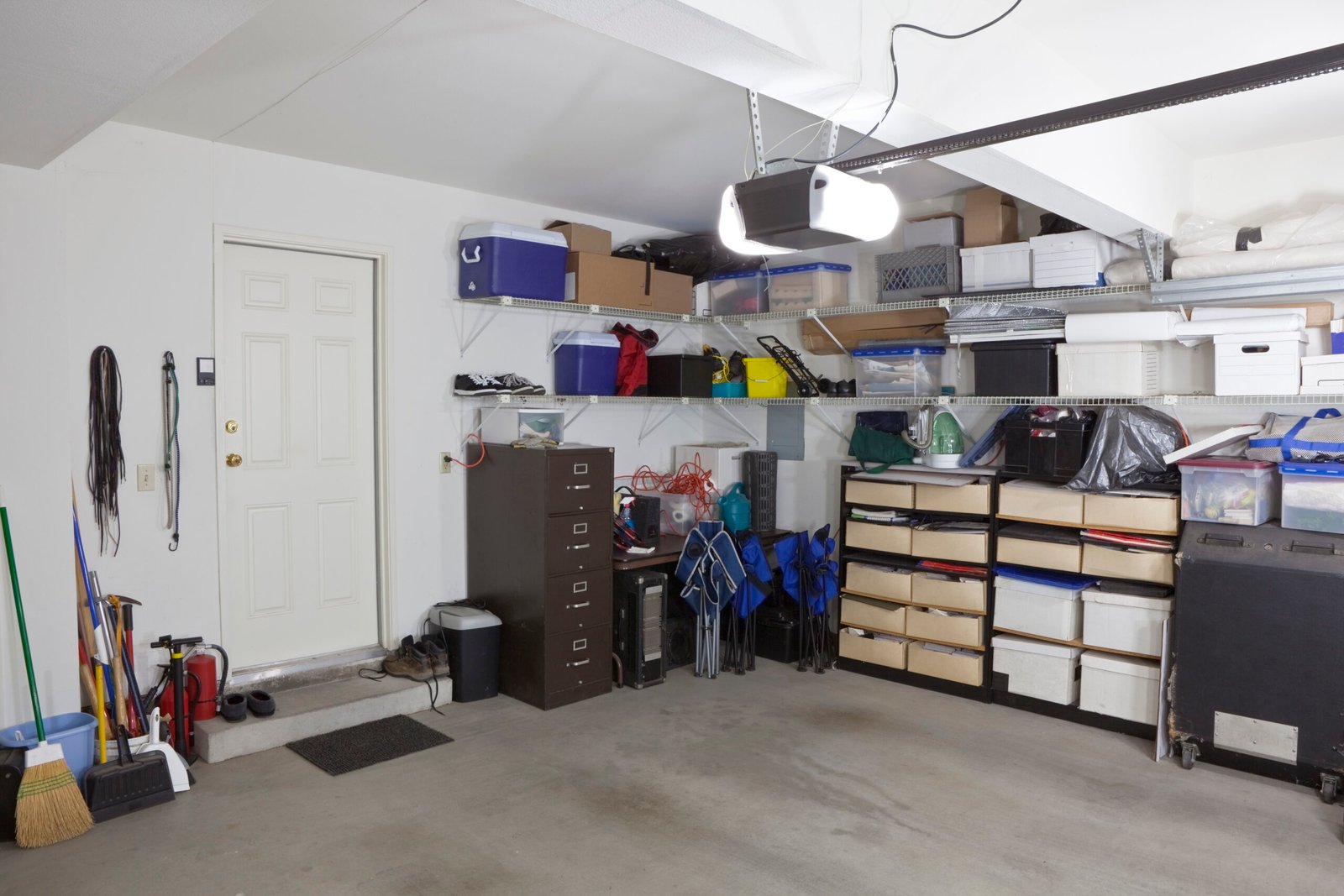
Let’s talk about garages.
Specifically, let’s talk about what garages actually are in most homes.
They are not the pristine, showroom-ready spaces you see in car commercials, where a gleaming SUV sits on a polished epoxy floor next to a single, artfully placed toolbox. They are not neatly zoned workshops with labeled drawers and pegboards that look like they belong on the International Space Station.
No. For most of us, the garage is The Void.
It is the place where things go when no one knows where else to put them. It is the Purgatory of the home.
- Old paint tins from a room you painted three years ago.
- Half-used bags of compost that have spilled slightly.
- A broken vacuum cleaner you are “definitely going to fix” (spoiler: you aren’t).
- Sports equipment from a hobby that lasted six weeks in 2019.
- Boxes labeled “Misc” because admitting defeat felt easier than organizing the contents.
The garage starts out as extra space. But over time, it quietly becomes a graveyard for decisions you didn’t want to make.
And the worst part? Once a garage tips into chaos, it stops being useful altogether. You can’t park the car in there (the ultimate irony). You can’t find a screwdriver when you need one. Every time you open the door, you feel a mild pang of guilt mixed with dread.
The problem isn’t that garages attract clutter naturally. It’s that garages are rarely given rules.
Good garage storage ideas aren’t about buying expensive industrial shelving and pretending you’re running an Amazon warehouse. It’s about creating boundaries. Clear zones. Clear access. Clear limits.
Here is how to organise your garage so it actually works—even if it’s small, shared with a car, and already a bit out of control.
If you’re working with a standard 2.4m-wide UK garage, see our dedicated guide to small garage storage ideas for layout rules that won’t block your car doors.
1. The Identity Crisis (Decide What It’s For)
Most garages fail because they are asked to do everything at once. We expect them to be a car park, a tool shed, a garden center, a sports locker, an attic overflow, and a recycling hub.
That doesn’t work without intention. If you try to do everything, you end up doing nothing well.
Before you buy a single shelf, answer this question honestly: What are the top three priorities for this space?
Common combinations:
- Parking the car.
- Bikes/Scooters.
- Tools.
Notice what is not on that list: “Storing everything we have ever owned.” If “Parking the Car” is priority number one, that becomes the non-negotiable center zone. You mark that space out (literally, with tape if you have to). Nothing is allowed to encroach on the car zone. Everything else must fight for the remaining perimeter space.
2. The “Floor Is Lava” Rule
If items live on the garage floor, the garage will always feel chaotic. Floors invite piles. Piles invite procrastination. Rodents love piles. Spiders love piles. Moisture from the concrete ruins piles.
The Rule: Nothing lives on the floor unless it is on wheels or too heavy to lift.
- Allowed: The lawnmower, the bikes, the rolling tool chest.
- Banned: Cardboard boxes, bags of potting soil, loose sports gear, off-season tires.
The moment you lift items off the floor—even just a few inches onto a low shelf or a pallet—the garage instantly feels 50% bigger. It creates “visual airflow.” Plus, you can actually sweep the floor, which keeps the dust down.
3. Go Vertical (The High Rise)
Garages usually have one huge advantage over the rest of the house: Height. You might have unfinished rafters or high ceilings. And yet, most people store everything at knee level.
Vertical storage is the backbone of a functional garage.
- The Track System: Instead of individual hooks, install a heavy-duty track system (like Rubbermaid FastTrack or Gladiator). You can snap hooks on and off.
- Heavy Goes Low: Paint tins, car jacks, and heavy toolboxes belong on the bottom shelves.
- Light Goes High: Camping chairs, empty coolers, and spare suitcases should be stored up near the ceiling.
Pro-Tip: Don’t buy deep shelving for the upper walls. If a shelf is too deep and too high, you lose things at the back. Keep high shelving shallow (12 inches max).
4. Zone It Like a Warehouse
A garage without zones becomes a dumping ground because nothing has a clear home. When you walk in with a bag of fertilizer, you just put it “wherever.”
You don’t need label makers, but you do need General Geographies.
- The Dirty Zone: Gardening tools, potting mix, lawn chemicals. Keep this near the garage door so you can grab them without tracking dirt through the whole garage.
- The Fix-It Zone: Tools, hardware, workbench.
- The Play Zone: Balls, bats, helmets, bikes.
- The Overflow Zone: Costco bulk buys, holiday decorations.
If your gardening gloves live in three different places, you will never find them. If they live in the “Dirty Zone,” you’ll find them every time.
5. Containment (The War on Cardboard)
This is a specific garage rule: Banish the Cardboard.
Garages are damp, drafty environments. Cardboard boxes absorb moisture. They get soggy. They attract silverfish and roaches who love to eat the glue. They collapse at the bottom of the stack.
The Upgrade: Uniform Plastic Totes.
- Why Plastic: It’s waterproof, pest-proof, and stackable.
- Why Uniform: If you buy 10 different types of bins, they won’t stack securely. Pick one brand and size (black and yellow “tough” bins are great for garages) and stick to it.
- The Look: A wall of matching bins looks organised, even if the insides are messy. A wall of mismatched Amazon boxes looks like a hoard.
Plastic bins are especially important in garages because they often double as overflow storage for things like seasonal clothing and laundry storage.
6. Pegboards (The “Shadow Board” Concept)
Pegboards aren’t just for mechanics or people who own five different power drills. They are one of the best storage tools for everyday households because they reduce Friction.
If a tool is in a drawer, you have to open the drawer and dig. If it’s on a pegboard, you grab it.
- Use them for: Extension cords, duct tape, scissors, gardening trowels, cleaning brushes.
- The Outline: If you want to get fancy, draw an outline of the tool on the board (a “shadow board”). It sounds obsessive, but it makes it immediately obvious when something is missing. “Hey, where is the hammer?”
7. The Ceiling (The Fifth Wall)
If your garage floor is full and your walls are full, look up. Overhead storage racks are a game-changer for bulky, seasonal items.
What belongs on the ceiling?
- The Christmas tree (artificial).
- Kayaks or surfboards.
- The camping tent you use once a year.
- The giant cooler.
This is also the ideal place for seasonal clothes storage or items you only access once or twice a year.
Safety Note: Make sure these racks are bolted into the joists, not just the drywall. And try not to position heavy storage directly above where you park your car’s windshield. Accidents happen.
8. The “Last Chance” Shelf
This is a subtle psychological trick. Garages often become the halfway house for junk. You take something out of the house because you don’t want it, but you aren’t ready to get rid of it. So it sits on the garage workbench for three years.
Create a specific shelf or table near the door called the “Outbox.”
- Rules: This is for returns, charity shop donations, and items to be lent to friends.
- The Timer: Nothing stays in the Outbox for more than two weeks. If it’s still there, it goes in the trash or the car trunk immediately.
- This prevents the “slow creep” of indoor clutter becoming outdoor clutter.
9. The “Fix-It” Fallacy
Garages are full of optimism.
- The lamp that just needs a new plug.
- The chair that needs gluing.
- The bike with the flat tire.
Ask yourself: Have I actively tried to fix this in the last six months? If the answer is no, it is not a project. It is clutter.
You are not storing a lamp; you are storing the guilt of not fixing the lamp. Create one “Fix-It Box.” If it fits in the box, you can keep it. If the box is full, you have to fix something or throw something away before you can add more.
10. Hazardous Materials (The Safety Corner)
Garages are often home to dangerous stuff. Old paint thinners, weird solvents, pesticides, batteries. Storing these randomly is dangerous (especially if you have kids or pets), and temperature fluctuations can make them leak.
- Batteries: Don’t let them freeze. Bring power tool batteries inside during winter.
- Paint: Latex paint ruins if it freezes. If you live in a cold climate, store leftover paint in the basement, not the garage.
- Chemicals: Keep these on a high shelf or in a lockable cabinet. Never in a low unlocked cupboard.
11. Leave Empty Space on Purpose
This feels wrong. You want to maximize storage, right? No. A garage that is filled edge-to-edge will always relapse into chaos.
You need Breathing Room. You need a clear section of workbench. You need an empty shelf. Why? Because life adds things. You get a delivery. You start a project. You buy a new bag of potting soil. If there is no “slack” in the system, that new item ends up on the floor. And once one thing is on the floor, the pile begins. Aim for 80% capacity, not 100%.
Final Thoughts
A garage doesn’t need to be beautiful. It doesn’t need color-coded floors or custom cabinetry. It needs to be functional.
When the tools are visible, the floor is clear enough to walk on, and the zones are respected, the garage stops feeling like a shame-filled secret and starts feeling like an asset.
You don’t need to do it all in one weekend. Start by lifting everything off the floor. Then define your zones. Then banish the cardboard. Once the garage has rules, it stops stealing space from the rest of your home—and quietly starts giving it back.
3 thoughts on “Garage Storage Ideas That Stop It Becoming a Dumping Ground”