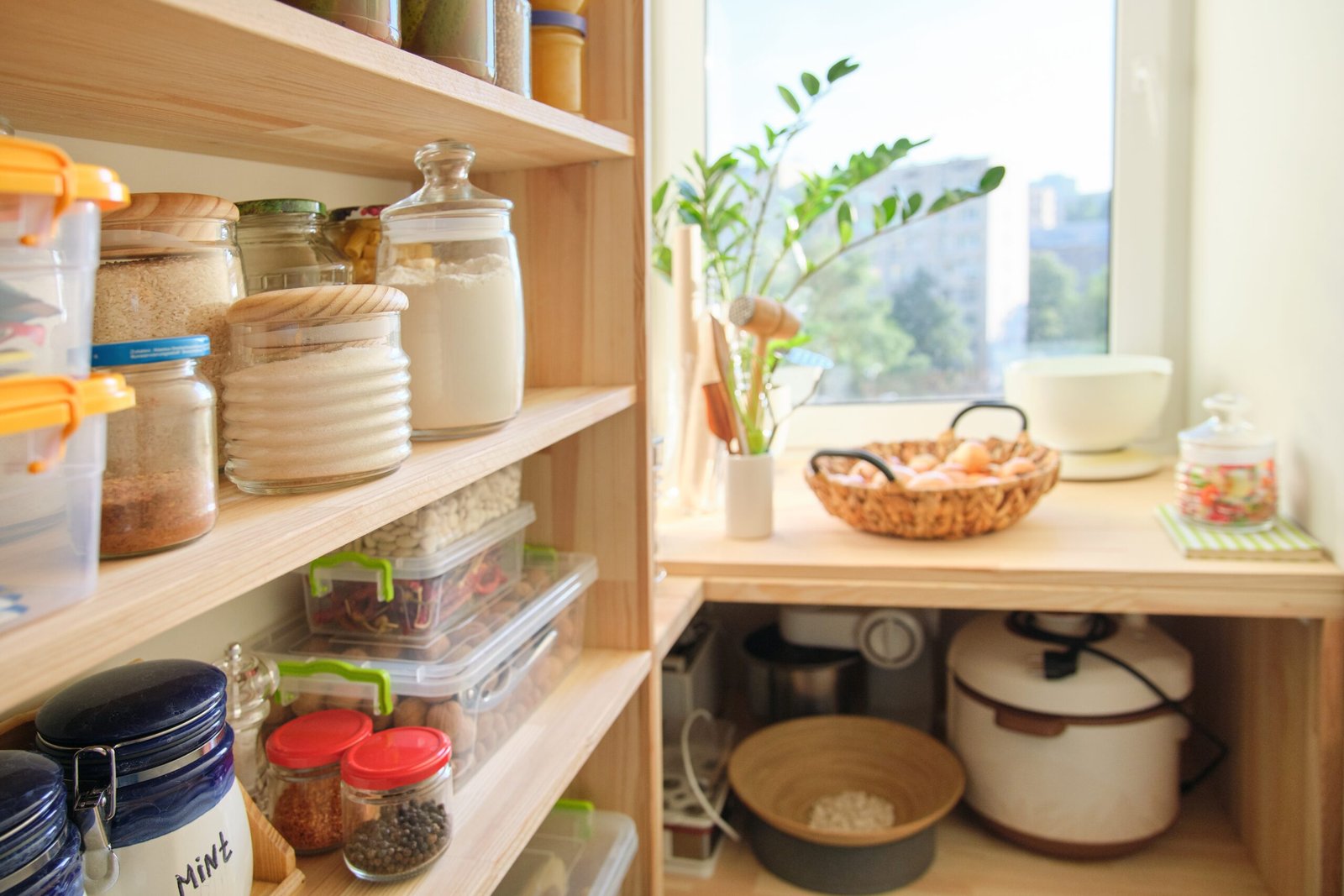
Let’s talk about kitchens—specifically, small kitchens.
The kind where you open one cupboard to get a mug, and three plastic containers fall out to greet you. The kind where your spice rack lives in five different locations because you can’t fit it all in one. The kind where every single counter surface is doing double duty as “temporary storage” that has somehow become permanent.
Small kitchens are brutal. They are the most hardworking rooms in the house. You are expected to prep food, cook, clean, store a week’s worth of groceries, house bulky appliances, and maybe even eat—all in a space that feels like it was designed for someone who only drinks smoothies and orders takeout.
And when storage fails in a kitchen, the anxiety is immediate.
Cluttered counters make cooking stressful. If you have to move a pile of mail and a toaster just to chop an onion, you aren’t going to want to cook. Overstuffed cupboards make you dread putting groceries away. You end up using the same two pans for everything because the rest are buried in a “pan stack” that requires a degree in structural engineering to dismantle.
Here is the good news: You don’t need a bigger kitchen. You need a smarter one.
You can create massive amounts of space without calling a contractor, ripping out cabinets, or pretending you’re going to become a minimalist overnight. You just need to understand the physics of the space you have.
Here are the best small kitchen storage ideas for real homes—used by real people who actually cook.
1. The “Clear Counter” Mandate
If your kitchen feels small, it is usually because your eyes have nowhere to rest. The counters are crowded.
Every item left out on the counter shrinks the room visually. “But I use the toaster every day!” you say. Do you? Or do you use it for three minutes in the morning, and then it sits there for the other 23 hours and 57 minutes, eating up your prep space?
The Rules of Counter Real Estate:
- The “Daily” Test: Only items used every single day get to stay. The kettle? Yes. The coffee machine? Yes.
- The Evictions: The knife block (it’s bulky; put knives in a drawer or on a magnetic wall strip). The bread bin (if you have cupboard space, move it). The massive jar of utensils (keep only your top 5 tools out; put the rest in a drawer).
- The Psychology: When you walk into a kitchen with clear counters, your brain registers “space.” It feels twice as big immediately.
Having this same mentality when it comes to shoes also works for entryway storage ideas. Have you used those wellies recently?
2. The Cupboard Door Hack (Hidden Gold)
Most kitchen cupboards are wasting 50% of their potential. We fill the shelves, but we ignore the doors.
The inside of a cabinet door is prime real estate. It is hidden, accessible, and perfect for the skinny, awkward items that get lost in deep drawers.
What to store here:
- Measuring Spoons: Stick small adhesive hooks on the door. Hang your measuring spoons there. No more digging through the drawer.
- Pot Lids: This is the big one. Pot lids are a nightmare to stack. Buy a simple wire rack that mounts to the door. Slide the lids in. Suddenly, your pots can stack neatly inside each other on the shelf.
- The “Under-Sink” Door: Hang a caddy for your dish wand, sponge, and gloves. It lets them dry out and keeps them off the sink rim.
3. Drawer Dividers (Stop the “Utensil Soup”)
Open your utensil drawer. Is it a calm, organized display of tools? Or is it a tangled metal soup where the potato masher is violently stuck to the whisk, jamming the drawer so it won’t open?
If your drawers aren’t divided, you are wasting space.
- The Physics: When items are loose, they sprawl. They mix. You end up with one messy layer of tools.
- The Fix: Use adjustable spring-loaded dividers or modular bamboo trays.
- The Zones: Create specific lanes.
- Lane 1: Prep (Knives, peelers).
- Lane 2: Cook (Wooden spoons, spatulas).
- Lane 3: Serve (Ladles, tongs).
Once everything has a “slot,” you can fit more in without it feeling chaotic.
4. Sell the Air (Vertical Storage)
Most kitchen cupboards come with one standard shelf in the middle. This is a design flaw. You put your dinner plates on the bottom shelf. They take up 4 inches of height. You have 10 inches of empty air above them before the next shelf starts.
That empty air is lost storage.
How to reclaim it:
- Shelf Risers: These are little metal tables that sit on your shelf. They double your surface area. You put plates under the riser and bowls on top of the riser.
- Undershelf Baskets: These wire baskets slide onto the shelf above and hang down. They are perfect for lightweight items like boxes of foil, sandwich bags, or napkins.
- Vertical Dividers: Stop stacking your baking sheets and cutting boards horizontally. They are a pain to pull out from the bottom of the stack. Use a vertical rack (like a file sorter) to stand them up on their sides. You can grab one without triggering an avalanche.
The same vertical thinking applies outside the kitchen too — especially when organising a home office workspace.
5. The Lazy Susan (The Corner Cabinet Savior)
Deep cupboards are where food goes to die. You buy a jar of pesto. You use half. You push it back to make room for the pasta. Six months later, you find the pesto at the back of the cupboard, fuzzy and green.
If you can’t reach the back of the cupboard easily, you need rotation. The Turntable (Lazy Susan):
- Where to use it: Corner cabinets, high shelves, and the pantry.
- Why it works: Instead of moving five cans of beans to get to the jar at the back, you just spin the tray.
- The “Oil & Vinegar” Station: Put all your sticky bottles (oil, soy sauce, vinegar) on a turntable in the cupboard. It contains the mess and makes them easy to grab while cooking.
For other ways to optimise layout, these kitchen cupboard storage ideas can help solve deep and awkward cabinet space.
6. The “Impossible Gap” (Rolling Carts)
Look at your kitchen. Is there a gap between the fridge and the wall? Or between the stove and the cabinets?
If that gap is wider than 10cm (4 inches), it is usable space.
- The Tool: A Slim Rolling Cart. These are tall, skinny shelving units on wheels.
- The Storage: Slide it into the gap. It is perfect for canned goods, spices, jars, or cleaning supplies.
- The Magic: It completely disappears when you aren’t using it. It feels like you created a pantry out of thin air.
7. Appliance Frequency (The Guilt Trip)
We store appliances based on size, which is wrong. We put the big things in the big cupboards. But we should store appliances based on frequency of use.
We all have that one gadget—the bread maker, the ice cream churner, the massive juicer—that we bought with good intentions. We use it twice a year. Yet, it takes up the prime eye-level shelf in the cupboard. Meanwhile, the Tupperware we use every day is jammed into a bottom drawer.
Re-Zone Your Kitchen:
- Daily Use: Eye level or counter.
- Weekly Use: Lower cupboards.
- Monthly/Yearly Use: Top of the cabinets, the back of the pantry, or even in another room (like the garage or under the bed).
Your kitchen is for cooking today, not for storing the aspirations of the cook you might be next Christmas.
8. Hooks Are Your Best Friend (The Julia Child Method)
Julia Child had a small kitchen. She hung everything on pegboards.
If you are out of drawer space, look to the walls.
- Rail Systems: Install a simple stainless steel rail under your upper cabinets. Hang your most-used utensils, a small basket for cutlery, or even small pots of herbs.
- Mugs: Mugs take up a lot of cabinet footprint. Install hooks under a shelf to hang them by their handles.
- The “Side of Cabinet” Trick: The exposed side of a cabinet is often blank. Stick a command hook there for your apron or tea towel.
Warning: Don’t overdo this. A few hanging items look chef-like and functional. Too many hanging items look like clutter. Keep it curated. Hanging utensils and tools are useful when thinking of garage storage ideas too.
9. Pantry Zones (Bin It to Win It)
If you don’t have a walk-in pantry, you have to create “pantry logic” inside a regular cupboard, using the same philosophy and pantry organisation ideas.
The biggest enemy in a small pantry is the “bag slump.” Bags of flour, sugar, pasta, and chips do not stack. They slump over, spill, and create a mess.
The Fix: Bins. You don’t need to decant everything into matching glass jars (unless you really want to). You just need to group them.
- Bin 1: Breakfast (Cereal, oats).
- Bin 2: Dinner Carbs (Pasta, rice, quinoa).
- Bin 3: Baking (Flour, sugar, baking powder).
- Bin 4: Snacks.
When you want to make a cake, you pull out the whole “Baking Bin.” You have everything you need. When you’re done, you put the bin back. It stops the ingredients from migrating to the back of the shelf.
10. The Monthly Kitchen Reset
Small kitchens are high-performance engines. They need maintenance. Because the space is tight, one extra bag of groceries or one misplaced stack of mail can ruin the flow.
The Ritual: Once a month, do a 15-minute reset.
- Check dates: Toss the expired sauces and the weird leftovers in the freezer.
- Re-stack: Stacks of bowls tend to get messy. Straighten them.
- Wipe down: Crumb-sweep the shelves.
- Edit: Did a random water bottle end up in the kitchen that belongs in the car? Move it.
Final Thoughts
A small kitchen doesn’t have to feel cramped. In fact, many professional chefs prefer small kitchens because everything is within arm’s reach. You don’t have to walk ten steps to get the salt.
When the storage works, the room feels lighter. Cooking feels like a creative act, not a battle against gravity.
You don’t have to do it all at once. Start with the “Clear Counter” rule today. Tackle the utensil drawer next weekend. Little by little, you will reclaim your space.
The same frequency-based approach works just as well for clothing — especially when you apply proper wardrobe organisation ideas.
4 thoughts on “Small Kitchen Storage Ideas That Actually Create Space (No Renovation Required)”
Comments are closed.